

Description
Throughout the liturgical year, the celebrant wears different colored vestments (chasuble and stole) depending on the time of year. White is a symbol of innocence and triumph and is used on all feasts of the joyful and glorious mysteries of Christ’s life (Christmas and Easter), on Marian feasts, on the feasts of angels and of all non-martyred saints. Red is the color of blood and is symbolic of passion and fire. This color is used on all feasts of Jesus’ Cross and Passion, on the feasts of the Apostles and of all martyrs. Red is also used on Pentecost in memory of the tongues of fire that appeared over the disciples.
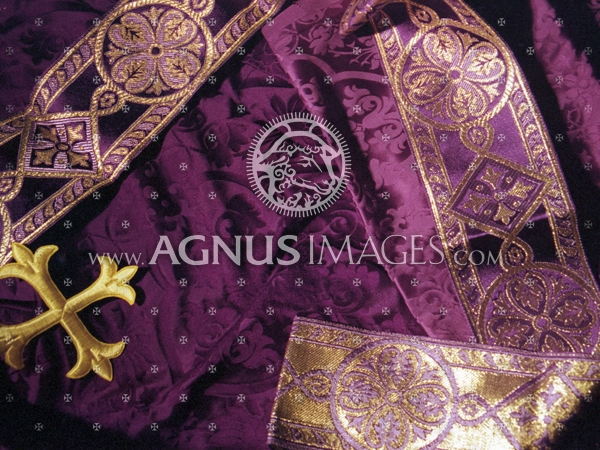
Purple has long been a symbol of penance and is used during the seasons of Advent, and Lent, and on fast days and vigils.
Green is the color of living vegetation and is symbolic of hope. This color is worn on the Sundays after Epiphany and after Pentecost. Rose colored vestments are permitted instead of purple on the third Sunday of Advent (Gaudete) and on the Fourth Sunday of Lent (Laetare). Gold vestments are permitted in place of white, red and green vestments. Black is the color of death and mourning. It is used for the services of Good Friday and for Masses for the Faithful Departed.


